Our people
Our Trustees and Executive team
 Susan Durston is an advisor in education and committed to equity in and through education in its broadest sense. She has been associated with CHILD to CHILD for many years, participating in materials and strategy development, and a board member since 2013. Her professional experience spans primary school teaching, University lecturing, and extensive programme management and technical long-term field experience in low income countries. Her long-term experience has been in Papua New Guinea, Uganda, Zambia, Malawi, India and Nepal, from where she also undertook frequent additional assignments in Sri Lanka, Afghanistan, Bangladesh, Pakistan, Maldives and Bhutan. Short-term assignments, which she still undertakes, have taken her additionally to Nigeria, Botswana, Indonesia, Vanuatu, and the Solomon Islands, and to Turkey (over 5 years) to evaluate UNICEF’s contribution to the education of Syrian refugees. As the former Associate Director, Education Programmes and Global Chief of Education for UNICEF. She led many initiatives, was UNICEF alternate member of the Board for the Global Partnership for Education, and co-chaired the Global Education Cluster, for Education in Emergencies.
She has worked for DFID, the European Commission, and at country, region and headquarters in UNICEF. In two previous postings, she had the opportunity to work in the health sector as well as the education sector, and situates her views in political economy as well as practice. She likes to work in a team and to mentor younger colleagues. Her passion now is building the capacity of children to participate their communities and realise their rights, through CHILD to CHILD, an organisation committed to child participation.
A national of the U.K. (Wales), she now lives in France, near Geneva Switzerland. She is a graduate of Cambridge, The Open University and London University Institute of Education in the U.K., and she carries on the Welsh tradition of choral singing.
 Celine Vatterott Woznica, Director of Child to Child of the Americas based in Chicago, Illinois, USA
Celine’s responsibilities include developing a network of programmes throughout the Americas that incorporate Child-to-Child methodology and the promotion of rights-based participation of children in issues that affect them. Since first participating in a Child to Child trainers’ workshop in Nicaragua in 1982, she has developed Child to Child programmes in Nicaragua, Mexico, Haiti, and inner-city Chicago and Gary, Indiana. She has provided numerous workshops on Child-to-Child methodology and the creation of spaces and techniques to allow for children to express themselves and be heard. Celine lived and worked for 11 years in Latin America, including Honduras, Bolivia, Nicaragua, and Mexico. In addition to Child-to-Child methodology, her other areas of expertise include the training of community health workers, immigrant and refugee health needs, popular education techniques, and Freirian methodology. She earned her MPH and DrPH from the University of Illinois School of Public Health.
Helen Walker has been working with Child to Child as an Early Childhood Advisor since 2014. She has worked in children’s programmes for many years and developed training and resource materials with a particular focus on equity and inclusion. Helen also has experience working in HIV/AIDS programmes supporting adolescents and young people. She currently lives in Melbourne and works in children’s services addressing poverty and disadvantage.
 Chie Takahashi has worked as an education specialist and a researcher for international organisations, such as UNICEF and the World Bank, both at headquarters and in country offices, including in Bangladesh, Cambodia, Kenya and Kosovo. Her expertise includes formal and non-formal primary education, community-driven development, gender, aid partnerships and effectiveness. She had technical advisory roles to ministries of education and development agencies. She also conducted qualitative and quantitative research, and provided evidence-based policy recommendations. Chie has devoted her focus on equity and inclusion in education, as well as in intra- and inter-organisational learning in the aid sector. She holds a PhD in Continuing Education/International Development from the University of Warwick (2003) and an MA in Development Studies at the University of Leeds (1999). She has recently completed two diplomas of Montessori education training for early childhood and lower elementary.
 Sarah Huxley is a highly experienced Youth and Child specialist, with over twenty years in the International Development sector working for a variety of organisations and grassroots groups including multi- laterals (such as UNFPA), bilaterals (such as FCDO), INGOs (such as ActionAid International), foundations (such as the Open Society), and with young people directly. She has initiated, led, and supported programme and policy initiatives across a range of thematic areas, including youth participation, governance, livelihoods, gender and social inclusion, and non-formal education. Her PhD focuses on the relationship between fun and learning with a play and movement based not for profit, Coaches Across Continents. She offers deep technical capabilities in learning and capacity building, knowledge exchange, and partnership development, including skills in participatory workshops, and inclusive facilitation. As a trustee she brings an outstanding track record of starting or taking an existing research/programme/policy initiative and driving it into original areas.
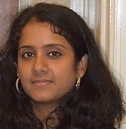 Niru Shaathvegan is a dedicated child rights professional, passionate about engaging in the initiatives to protect the rights and well-being of children and young people. Niru studied at Sri Lanka Law College (2009), gaining a First Class Honours degree in Law and was later awarded a scholarship to pursue a Master’s degree in Law (LL.M) at University of Wales. In addition, Niru also holds a Bachelor’s Degree in International Relations, Sociology and Economics from the University of Colombo. Niru started her career as a Legal Officer for ChildLine and later worked as Programme Officer for a Child Protection project funded by GIZ, Sri Lanka. Having established her career goals in the field of children’s rights and child protection, Niru has since completed an MSc in Children’s Rights from Cambridge Anglia Ruskin University. She first joined Child to Child in 2016 as an intern on the Child Rights Capacity Development programme and now plays a key role in implementing Child to Child’s work.
Our Advisors
 Gerison Lansdown was the founder director, 1992-2000, of the Children’s Rights Alliance for England, and has since worked as an international consultant and advocate, publishing and lecturing widely on the subject of children’s rights. She has been involved in the development of several general comments for the Committee on the Rights of the Child, including on right of children to be heard, to play and recreation, on the rights of children both during adolescence, and, currently, on rights in the digital environment. She was also involved in the drafting of the Convention on the Rights of Persons with Disabilities. Publications include The Evolving Capacities of the Child, Innocenti Research Centre, 2005; Article 31, in A Commentary on the CRC, Oxford University Press, ed J Tobin, 2019; Children’s Rights Institutions, in The Oxford Handbook of Children Rights Law, ed J Todres and S King, Oxford University Press, 2019; Recognising children’s rights in relation to digital technologies, in Research Handbook on Human Rights and Digital Technologies, ed Wagner, Ketteman and Vieth, Elgar Publishing, 2019; Strengthening child agency to prevent and overcome maltreatment, in Child Abuse and Neglect, 2020; Exploring the meaning of child participation, in The Children’s Senator, ed V Caputo, McGill-Queens Press, 2020. She is an adjunct professor at University College Cork, and Carleton University Canada, has an Honorary Doctorate from the Open University, University of East London, and Carleton University, an Honorary Fellowship from the University of Central Lancashire, and is on the editorial advisory board of the Canadian Journal of Children’s Rights. She chairs the ODI Gender and Adolescence: Global Evidence Advisory Board.
 Sonal Zaveri is India based, with over 30 years’ experience in strategic planning, program design, capacity building, mentoring and evaluation. She has a PhD in Social Work and was a Fleishman Fellow at Duke University, USA. She has worked in more than 25 countries in Asia, East and West Africa, Asia-Pacific, Central Asia, Middle East and Eastern Europe at grassroots, sub-national, national, regional and international levels bringing a broad contextual experience. She has worked with CBOs, NGOs, INGOs, foundations, academic institutions, government, and multilaterals.
Sonal’s interests relate to how rights, participation. transformation and gender are addressed through collaborative, culturally responsive and learning oriented evaluation approaches and methodologies. She has multiple publications including book chapters, journal articles, monographs and manuals. She has worked extensively with children and adolescents and included principles of children’s participation in several sectors such as education, health, community mobilization, and gender in both humanitarian and development contexts for program design, implementation, monitoring and evaluation.
She holds regional and global leadership positions – founder and board member of Community of Evaluators South Asia; coordinator of GENSA, Gender and Equity Network South Asia; co-chair EvalGender+, member of the EvalPartners Coordination Committee, board member of IEAC (International Evaluation Academy) and IDEAS and a core member of the S2SE – South to South Evaluation which addresses asymmetries in global evaluation.
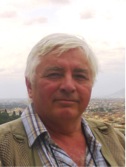 Peter Dixon is an independent consultant and trainer on child rights and child rights programming with more than 35 years’ experience in International Development, including 14 as a country director with VSO (Uganda and Belize), Sight Savers (East and Southern Africa Region) and Save the Children (Nepal and Sri Lanka). Peter has facilitated many strategic planning processes, with thematic, country or regional scope, involving programme reviews and the facilitation of child rights situation analyses. He has been a principal author in several publications, including, Leave No Child Out, Action for the Rights of the Child, Child Rights Situation Analysis Guidelines, as well as the design and delivery of online child rights focused courses for Human Rights Education Associates (HREA) and others. For the past 7 years he has been part of the Child to Child team supporting the “6 Principles” Child Rights Capacity Development Programme supporting 60 Oak Grantees working in the field of Child Abuse to build their capacity to better apply child rights principles in their work.

Jon Stutfield is a digital and communications consultant, focussed on supporting charities and nonprofits. He is supporting Child To Child on an ongoing basis to help deliver digital projects and campaigns, including e-learning initiatives.
Jon has worked with many small and large nonprofits over a 25 year career, including The New Humanitarian, Humanitarian Leadership Academy and Institute of Statelessness and Inclusion. He also works in a number of voluntary positions, as a board member, mentor and consultant, helping charitable organisations use digital strategically to achieve their objectives and become more effective.

Tricia Young is the Director of Global Systems Change at the Lumos Foundation. Part of her portfolio is overseeing the comprehensive child participation work, which ranges from child and youth participation in national programming; national, regional and global youth advocacy; and ensuring accountability to children and youth through youth advisory boards. Prior to this, she ran Terre des hommes UK for 3 years. Between 2010- 2018 she was the Director Child to Child. She is a founder trustee on the board of the UK Global Fund for Women.
Violet Mugisa has a 30-year experience working with children in and out of schools using different methodologies of participatory development. She has experience in using the Child-to-Child approach to health or children’s rights and in integrating PRA, PLA, LFA, with Child-to-Child approach to come up with community-led projects for children. She has also worked in project design, implementation and monitoring; materials design and production; and project evaluation. Violet has facilitated workshops and training – with the use of Visualization in Participatory Programming – and child participation programmes. She has also supervised teachers’ teaching, trained teachers in participatory teaching methods and trained caregivers in pedagogy skills, i.e. Mediated learning experiences (MLE). She has worked extensively with Save the Children, Plan International, UNICEF, WHO, World Vision, Comic Relief etc. and is currently a freelancer.
 Annabel Trapp has been working to promote the rights of children since 2005, with particular focus supporting the application of child rights-based approaches in organisations working with children. She joined Child to Child in 2015 to manage a capacity building project supporting over 60 organisations (based in East Africa and Eastern Europe) to operationalise child rights principles, and to facilitate the project’s emerging community of practice. She also represents Child to Child on the steering group of the INGO Children’s Participation Forum. Annabel has an MSc in Violence, Conflict and Development from SOAS, University of London and MA in Social Anthropology with Development from the University of Edinburgh. She lives near Amsterdam.
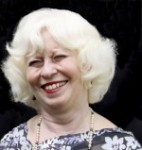 Anise Waljee has conducted consultancies in various domains, including environmental and health education, early childhood education, inclusive education policy and practice, and organisational change and strategic planning in and for various NGOs in London, Lebanon and Pakistan. Born and brought up in Dar es Salaam, Anise worked in the British civil service on employment services for disabled people before being introduced to a career in education. Among her many roles over the years, she managed the Agha Khan Foundation education programme for Tajikistan, working with the government to reform the education system; her role as team manager included oversight of curriculum and materials development, educational management, community mobilisation, capacity building, facilitating decentralisation and school autonomy. Anise worked in East Africa, Canada, East Timor, Albania and Central Asia, and speaks fluent English, Urdu, Tajik and Kiswahili. Her personal interests include literature, music, theatre, photography and storytelling to name a few.
 Carolyn Conway has been working to promote the rights and participation of children and young people since 2006 when her association with Child to Child began. She has been teaching and training teachers for over 25 years, writing teacher training manuals and designing courses for teachers in Europe and Asia, primarily in Laos and Bangladesh. She completed a Master’s degree in Education and International Development at the Institute of Education, University of London in 2006. She managed Child to Child’s Hearing All Voices programme which supported UK schools to improve the life chances of disadvantaged children and young people. She is writing professional development materials to introduce coaching techniques as a way for adults to enhance their support of young people’s participation and develop their social and emotional learning. She is especially committed to transforming working practices in schools to make them more participatory environments in which young people have a voice.
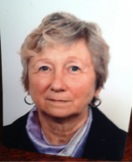 Grazyna Bonati has worked with Child to Child for over 20 years, in many regions of the world – as she can work in English, French, Spanish and Portuguese. After working at Child to Child for over four years, she began freelancing and extended her range of training skills to cover Child Participation; Child Rights; Working with Children; Gender Issues; Advocacy; HIV/AIDS; Memory Books; Orphans and Vulnerable Children; Disaster Risk Reduction and Non-Violent Conflict Resolution. Grazyna trains people who work with children to do so in a participatory way, and involve them increasingly in community development, whether in terms of health education or more general themes. She has also been involved in project design, evaluating projects and particularly in looking for ways forward to improve project work. She has written several manuals and helped in the production of others.
 Penny Boreham is an experienced radio producer and broadcaster and has been the series editor of ‘Pikin to Pikin Tok’, and more recently ‘Fambul Tok’. She also produced and presented an hour long BBC World service documentary about ‘Pikin to Pikin Tok’. She is an award-winning radio documentary maker and radio drama producer, working for both the BBC World Service and BBC Radio Four. For fifteen of her thirty years working in radio, Penny was a Senior Producer at the BBC World Service. Penny is passionate about using radio and audio to empower children to share ideas and speak their mind. As a result of this, she launched her own charity ‘SoundAffects’ to enable children to connect cross-culturally, and share their ideas and dialogue about their deepest concerns. She has worked extensively for the Open University, creating podcasts with academics in order to enable them to talk accessibly, but still subtly, about their research. Penny is also experienced as a trainer, mentoring younger radio journalists.
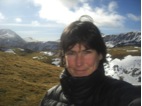 Claire O’Kane has been an international child rights consultant since 2011, after working for Save the Children for many years. She is a qualified social worker with two decades of international experience in child rights, participation, protection, care and peace building work in development and emergency contexts, particularly in Asia and Africa. Claire has particular expertise in supporting child-led organisations, networks and partnerships with adults enabling children and young people to be recognised as active citizens. Her 50 publications include: Guidelines for children’s participation in humanitarian programming, Save the Children 2013; Children and Young People as Citizens: Partners for Social Change, Save the Children, 2003.

 Médecins Sans Frontières – Doctors Without Borders (MSF) – declared the

![21. YF and YL session [1]](http://www.childtochild.org.uk/wp-content/uploads/2014/05/21.-YF-and-YL-session-1.jpg)


